

As businesses grow and expand their teams, they often face the decision of hiring contractors or employees. While there are similarities between the two, there are also some clear distinctions. A worker’s classification can affect several areas, such as taxation, legal liabilities and workplace rights.
To decide what’s best for your organisation, you need to understand the difference between an independent contractor and an employee.
The Shift in 2022
Prior to 2022, determining whether a worker was an employee or a contractor was up to the organisation.
Two High Court decisions in 2022 changed this approach. The courts mandated that when deciding whether a worker is an employee or an independent contractor, courts should primarily examine the written contract between the parties, rather than focusing heavily on how the working relationship operates in practice.
This shift means the terms of the contract now carry much more weight when determining worker classifications, so organisations must be more cautious when hiring contractors or employees and drafting contracts. These rules fall within the broader framework of Australia’s Fair Work Act 2009.
What Counts as an Independent Contractor vs an Employee?
There are several common indicators that help determine whether someone is an employee or a contractor.
A worker is more likely to be considered an employee if:
- The business controls how, when and where the work is performed.
- The worker is paid wages or a salary regularly from the business.
- The worker uses the company’s tools, equipment or systems.
- The worker is part of the organisation’s structure or team.
- The worker cannot subcontract or delegate their work to someone else.
- The business provides leave entitlements or employee benefits.
- They are expected to work on an ongoing or long-term basis.
A worker is more likely to be considered an independent contractor if:
- They operate their own business or company.
- They control how the work is completed.
- They can delegate or subcontract work to others.
- They provide their own tools, equipment or materials.
- They are paid per project or per service provided.
- They can work for multiple clients at the same time.
- They are responsible for their own taxes, insurance and superannuation.

Key Differences Between an Independent Contractor and Employee
The table below clearly outlines the main considerations when hiring contractors vs employees.
| Feature | Contractor | Full-Time Employee |
|---|---|---|
| Tax (PAYG) | Responsible for managing their own tax obligations and invoicing the business for services provided. | The employer withholds Pay As You Go (PAYG) tax and manages reporting through payroll. |
| Superannuation | Usually responsible for their own superannuation, although in some cases the hiring business may be required to contribute. |
Employers must pay superannuation contributions according to Australian law.
For more detail, read our guide to payday super changes for employers. |
| Leave | Not entitled to paid leave such as annual leave or sick leave. | Eligible for leave entitlements such as annual leave, sick leave and other benefits under employment law. |
| Compensation | Typically responsible for their own insurance and protections depending on the nature of their work. | Covered by workplace protections such as workers’ compensation and other employee safeguards. |
| Tools/Equipment | Often supplies their own equipment, tools or software needed to complete the work. | Usually provided with the tools and equipment required to perform their role. |
| Benefits (for the worker) | Freedom, with the ability to work with more than one client, but less job security. | Greater stability, predictable income and access to workplace benefits and protections. |
The benefit of hiring a contractor is that they run their businesses independently, which often reduces administrative responsibility for companies. On the other hand, employees work for a company and receive benefits like paid time off.
By understanding these differences between a contractor vs an employee, you can ensure that your workers are classified correctly and paid in line with relevant regulations.
When Would You Need Contractors or Full-Time Employees?
Choosing a contractor over an employee, whether part-time or full-time, often depends on the nature of the work, your organisation’s needs and how long you expect the work to last. For example, there are some industries that rely heavily on employees for long-term services, while others benefit more from hiring independent contractors for short-term work engagements.

Project-Based Work and Specialist Skills
Companies often hire contractors with specialised skill sets for one-off or short-term projects.
Common industries that depend on contractors include technology, creative services, consulting and construction. Examples include hiring a developer to build a new app, a freelance designer for a marketing campaign, a consultant for a short-term strategy project or specialist trades to complete phases of a construction project.
One of the key benefits of hiring a contractor is flexibility, allowing businesses to scale their workforce up or down as project requirements change.
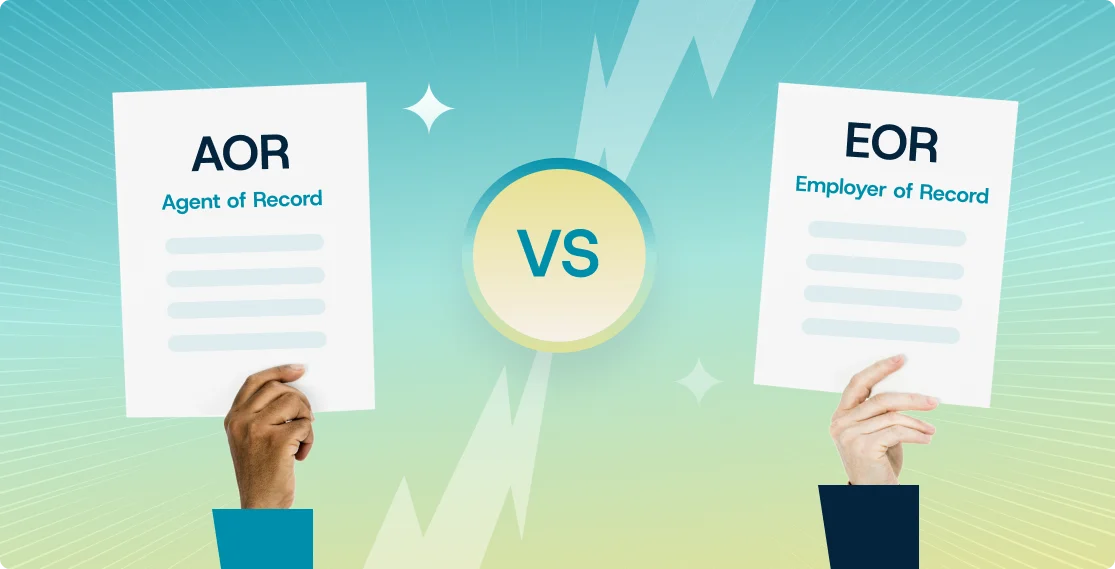
In situations where a company is looking at international contractors, services like an Agent of Record (AOR) can help manage agreements, payments and contractor compliance.
Long-Term Roles and Team Integration
Full-time, part-time and job-share employees are typically better suited for ongoing roles that require consistency, team collaboration and long-term commitment. These roles often provide job security, structured career development and other workplace benefits.
Industries such as healthcare, finance, manufacturing and corporate services prefer permanent employees because these roles depend on long-term stability and strong internal teams.
For organisations that want to expand internationally without having to set up a local entity, an Employer of Record (EOR) can help them legally hire full-time employees in other countries while managing payroll and compliance obligations.
Flexibility vs Stability
One of the main reasons businesses choose independent contractors is because they offer a lot of flexibility. Contractors can be engaged quickly and are often paid per project or service, making them more attractive for short-term needs or fluctuating workloads.
However, this flexibility can come with limitations. Contractors may be working with multiple clients at once and can’t be as integrated into internal processes, which can lead to challenges in communication and collaboration on projects that require a deep understanding of the company’s culture and objectives.
The trade-off is that hiring employees usually entails HR responsibilities, including payroll, benefits and employment compliance.
Sham Contractor in Australia: Risks and Penalties
When workers are labelled as independent contractors, but their relationship is similar to that of an employee, this is referred to as ‘sham contracting’. It’s usually done to avoid paying for entitlements like leave, superannuation or minimum wage protections.
Sham contracting is prohibited under Australia’s workplace laws and can have serious consequences, including fines, back payments and legal action. To minimise the risks associated with sham contracting, companies should ensure their employees are properly classified and their contracts accurately reflect a true working relationship.

Transitioning from Contractor to Full-Time Employee
It’s quite common for a contractor role to evolve into a full-time position, especially when a project expands or the business identifies a longer-term need.
For instance, a company may hire a contractor for a short-term project but later realise the role is needed on a permanent basis, leading them to offer a full-time position.
This transition can be advantageous for both parties: the worker gains security and employment benefits, while the business retains the worker’s valuable skills.
When this happens, the company also needs to ensure that the worker is properly reclassified and their employment contract is updated. It could be as simple as moving from an AOR arrangement to the EOR model.
Key Takeaways
- Contractors and employees are engaged under different arrangements, which affect tax, superannuation, workplace rights and legal responsibilities.
- Worker classification matters. Misclassifying a worker can lead to compliance risks, financial penalties and back payments.
- Contractors typically offer flexibility and specialised expertise, while employees provide stability and long-term integration within a business.
- Some contractors may still be entitled to superannuation.
- Contractor arrangements can transition into full-time employment, as long as it’s done the right way.

Making the Right Choice Between Contractor vs Employee
Deciding whether to engage a contractor or hire a full-time employee depends on your business goals, the type of work required and how long you expect the role to last.
If you’re unsure which option best suits your organisation, getting the right workforce advice from EPG Group can make the process much easier.
Reach out to us today and let’s chat about your employee or contractor needs.